Cool Deck vs Pavers: Best Pool Deck Option for Arizona Heat
When it’s 115°F in Phoenix, your pool deck surface matters more than anywhere else in the country. The wrong choice means burned feet and an unusable backyard.
We see this issue constantly with pools built 10 to 15 years ago that need pool deck resurfacing.
The right choice means comfortable walking all summer long. Let’s compare the three main options for heat-beating pool decks in Arizona to help you make the practical choice.
The Heat Challenge
Standard gray concrete can reach 150°F+ on a Phoenix summer afternoon. That is literally hot enough to cause second-degree burns in under a minute.
We measured different surfaces on a 108°F day to see exactly how they perform.
Here is what the data says:
| Surface Type | Approximate Surface Temp | Barefoot Comfort |
|---|---|---|
| Dark Concrete Paver (Sierra Color) | 171°F | Dangerous |
| Standard Concrete | 138-140°F | Painful |
| Cool Deck (Acrylic Lace) | 125-130°F | Warm but tolerable |
| Light Travertine | 115-120°F | Comfortable |
These numbers explain why surface choice is the single most important decision for your renovation.
Cool Deck (Acrylic Lace)
What It Is
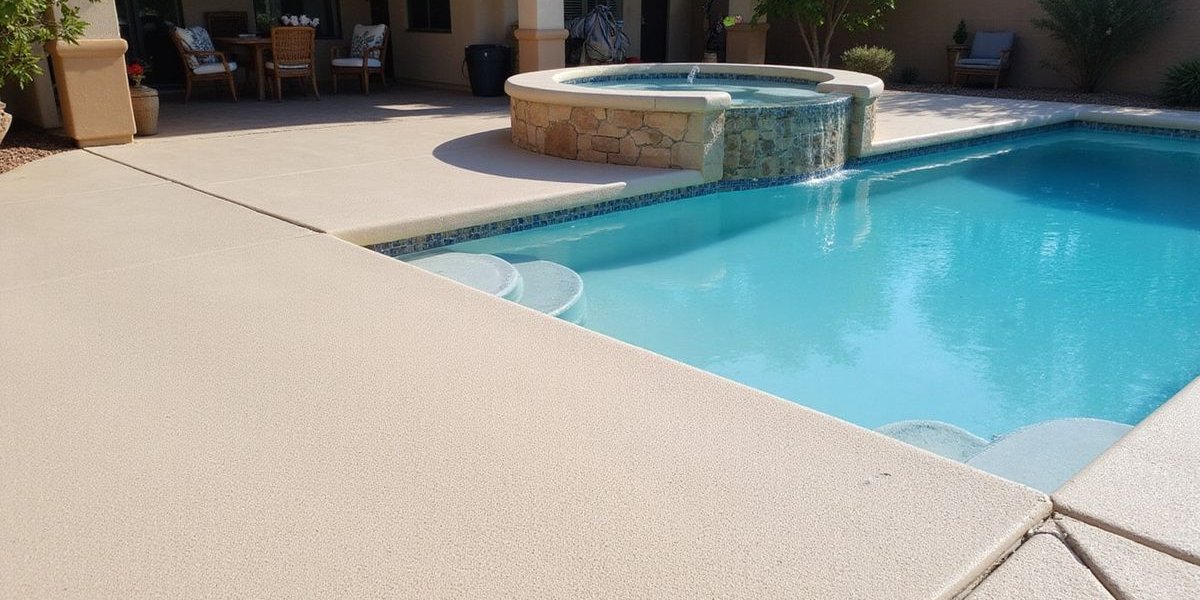
Most Arizonans call it “Cool Deck,” but the modern standard is actually Acrylic Lace. This is a textured, cement-based coating heavily fortified with acrylic resins to withstand our UV index.
We apply this coating directly over your existing concrete deck.
The light color reflects sunlight, while the “lace” texture creates tiny air pockets under your feet to dissipate heat.
Pros
Significant Heat Reduction: It typically stays 10-20 degrees cooler than plain concrete. For many families, this is the difference between running to the pool and walking comfortably.
Cost Effective: This is the most affordable option for existing decks. Current Phoenix market rates for 2026 sit between $4 and $8 per square foot.
Fast Installation: Our crews can often finish an average deck in just 2-3 days.
Slip Resistant: The “lace” texture provides excellent traction when wet, making it safer for children running near the edge.
Cons
Durability Limits: You can expect it to last 8-15 years before it needs recoating.
Maintenance Sensitivity: It can chip if abused. Pro Tip: Never use a high-pressure nozzle (over 1800 PSI) close to the surface; it will blast the texture right off the concrete.
Appearance: It offers a clean, utilitarian look. While functional, it lacks the premium appeal of natural stone.
Repair Visibility: Patches are difficult to hide. Even a professional color match will often look like a patch due to weathering on the old deck.
Pavers
What They Are
These are interlocking concrete or stone units laid on a sand bed. Manufacturers like Belgard and Tremron are popular in Arizona for their wide range of desert-appropriate colors.
Pros
Aesthetics: They provide a beautiful, upscale appearance. You have nearly unlimited design options.
Durability: Properly installed pavers can last 25-50 years.
Repair Friendly: Individual pavers can be lifted and replaced if they crack or stain.
No Cracking: The sand joints allow the deck to move with the shifting soil without snapping.
Home Value: They add significant curb appeal and resale value compared to coated concrete.
Cons
Heat Retention: Standard concrete pavers get extremely hot. Darker colors like “Sierra” or “Rio” can actually be hotter than your old concrete deck.
Higher Cost: Expect to pay $10 to $20 per square foot installed.
Installation Time: It is a longer project, typically taking 1-2 weeks.
Common Pitfalls
Weed and Ant Issues: The sand joints can become a maintenance headache. We recommend using a high-quality polymeric sand to lock the joints, but even that requires touch-ups in our dry heat.
Settling: If the base isn’t compacted perfectly, pavers can sink over time.
Heat-Reducing Paver Options
Some specialty pavers address the heat issue:
- Light-colored pavers: Always choose the lightest color possible (like biscuit or ivory) to reflect heat.
- Permeable pavers: These allow water evaporation, which provides a slight cooling effect.
- Specialized cool pavers: Some brands offer heat-reflective options, though availability varies.
Travertine
What It Is
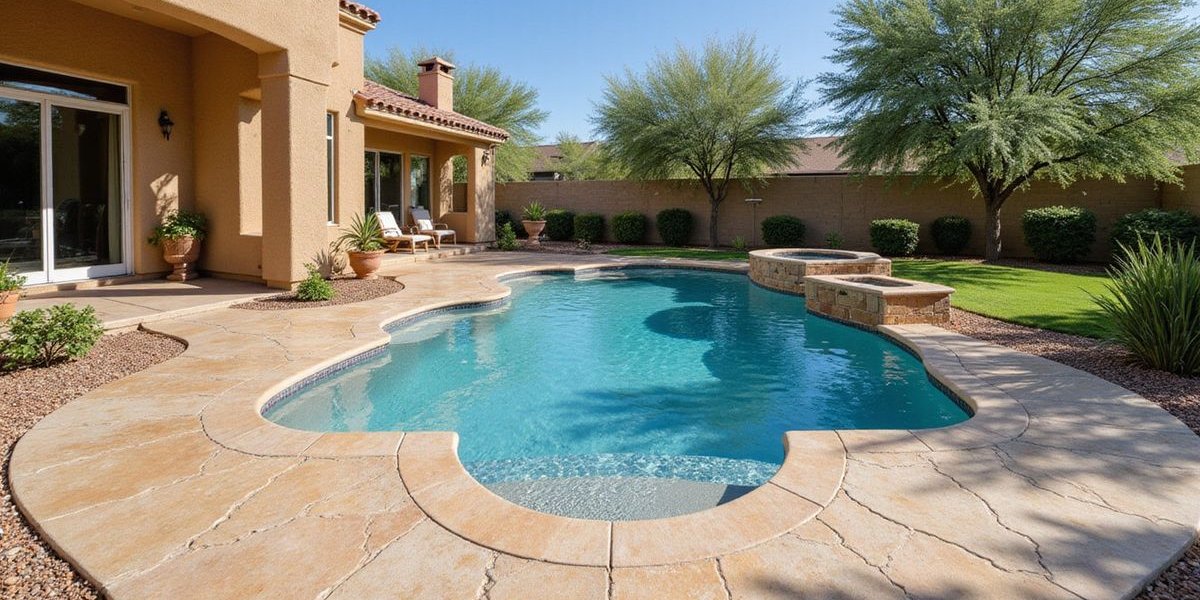
Travertine is a natural limestone formed near hot springs. It is prized in Phoenix for its unique ability to stay cool.
We recommend a “tumbled” finish for pool decks. This texture meets ASTM C1028 slip-resistance standards, unlike polished or honed stone which gets slippery when wet.
Pros
Naturally Cool: It stays 20-30% cooler than concrete pavers. Silver Travertine is often the coolest option available because its light grey tones reflect the most intense UV rays.
Elegant Appearance: It creates a timeless, resort-quality look.
Durability: This stone lasts 50+ years with proper care.
Unique Character: Natural mineral deposits mean no two pieces are identical.
Home Value: It is a premium material that homebuyers in the Valley specifically look for.
Cons
Higher Cost: Installation runs $15 to $30 per square foot.
Maintenance: It is porous stone. You must seal it every 2-3 years with a penetrating sealer like Aqua Mix Sealer’s Choice Gold to prevent staining from salt water or spilled drinks.
Etching: Acidic substances (like spilled margarita mix or harsh cleaners) can “etch” or dull the surface.
Color Variation: The natural variation is beautiful to most, but can look “messy” to those who want a uniform color.
Side-by-Side Comparison
| Factor | Cool Deck (Acrylic) | Concrete Pavers | Travertine |
|---|---|---|---|
| Heat Performance | Good (125°F) | Poor to Moderate (140-170°F) | Excellent (115°F) |
| Upfront Cost | Low ($4-8/sf) | Medium ($10-20/sf) | High ($15-30/sf) |
| Lifespan | 8-15 years | 25-50 years | 50+ years |
| Maintenance | Moderate (Recoat) | Low (Weeds/Sand) | Moderate (Seal) |
| Aesthetics | Basic | Good-Excellent | Excellent |
| Installation Time | 2-3 days | 1-2 weeks | 1-2 weeks |
| ROI/Home Value | Moderate | Good | Excellent |
Cost Comparison
For a typical 600 sq ft pool deck in Phoenix (2026 pricing):
| Option | Material + Labor | Lifetime Cost (25 years) |
|---|---|---|
| Cool Deck | $2,400 - $4,800 | $5,000 - $9,000 (includes 1-2 recoats) |
| Concrete Pavers | $6,000 - $12,000 | $6,500 - $13,000 (includes maintenance) |
| Travertine | $9,000 - $18,000 | $10,000 - $19,000 (includes sealer) |
Cool Deck costs less upfront but requires ongoing recoating investments.
We find that Travertine and pavers cost more initially but often pay for themselves by eliminating the need for future resurfacing.
Making Your Decision
Choose Cool Deck If:
- Budget is your primary concern.
- You want quick installation before a big event.
- You are comfortable recoating in 10-15 years.
- Heat reduction is more important than aesthetics.
- Your existing concrete is structurally sound with minimal cracking.
Choose Pavers If:
- You want a balance of cost and aesthetics.
- Durability and longevity are key goals.
- You prefer defined design options and patterns.
- You can accept some additional heat (unless you choose very light colors).
- You want to avoid the “cracked concrete” look forever.
Choose Travertine If:
- Budget allows for premium materials.
- You want the coolest possible surface for tender feet.
- Aesthetics are a top priority.
- You are planning long-term ownership.
- You want the “resort” look that defines luxury Arizona homes.
Combination Approaches
Many Phoenix homeowners successfully mix materials to balance their budget.
Travertine Coping + Acrylic Deck: We often install premium Travertine coping (the edge right around the water) where people sit, and use cost-effective Acrylic Lace for the main walking areas.
Paver Accents: You might use pavers for the BBQ area or fire pit where heat on bare feet isn’t a concern, keeping the cool deck around the pool.
This balances budget with performance where it matters most.
Our Recommendation
For most Phoenix homeowners, we suggest:
Best Value: Acrylic Lace (Cool Deck) on existing concrete. It offers immediate heat relief at the lowest cost.
Best Overall: Silver Travertine with proper installation. The higher upfront cost pays off in superior comfort, stunning appearance, and decades of longevity.
Middle Ground: Light-colored concrete pavers. These offer good aesthetics and durability, though you must be careful with color selection to avoid creating a heat trap.
Want to discuss options for your specific situation? We offer free consultations and can show you samples in person. Contact us to schedule.
Related Topics
Need Pool Resurfacing Help?
Get expert advice and a free estimate for your pool project. We serve the entire Phoenix metro area.
Get Free Estimate